Sound Quality
The Topping DX5 II is built around the ESS ES9039Q2M — the latest flagship chip in ESS’s Sabre line, and a meaningful step up from the ES9038Q2M that powered so many well-regarded DACs in recent years. In practice, the sonic improvement is not a night-and-day leap, but it is audible in the ways that matter. The noise floor is vanishingly low, dynamic range is exceptional, and the overall presentation has a composure and effortlessness that suggests the chip is operating well within its comfort zone. Tonally, the DX5 II leans neutral with a hint of refinement in the treble — not rolled off, but smoothed just enough to avoid the analytical edge that some ESS implementations are known for. Cymbals shimmer without splash, vocal sibilance is controlled, and bass notes land with satisfying definition and speed.
The headphone amplifier section is where the DX5 II truly flexes. With 2000mW of power into 32 ohms, it drives demanding planar magnetic headphones like the HiFiMAN Sundara and Audeze LCD-2 with genuine authority. The balanced 4.4mm output is the preferred connection here, delivering noticeably wider staging and blacker backgrounds compared to the single-ended 6.35mm jack. Even sensitive IEMs are handled gracefully — there is no audible hiss or channel imbalance at low volumes, which speaks to the quality of the volume control implementation. Switching between high and low gain is straightforward, and the unit adapts well to anything from 8-ohm IEMs to 300-ohm Sennheisers.
Then there is the feature that elevates the DX5 II from merely competent to genuinely special: the built-in 10-band parametric EQ. This is not a crude bass-and-treble tone control — it is a fully configurable parametric equalizer with adjustable center frequency, gain, and Q factor for each of the ten bands. For headphone enthusiasts who use EQ profiles from databases like AutoEQ or oratory1990’s target curves, the DX5 II eliminates the need for software-based EQ entirely. You can dial in a Harman target curve, tame a resonance peak, or boost sub-bass extension, and the adjustments are applied at the hardware level with zero latency. The EQ settings persist across input sources, meaning your carefully tuned profile works whether you are connected via USB from your computer, streaming over Bluetooth from your phone, or feeding optical from your television. This alone makes the DX5 II a fundamentally more versatile tool than any competitor in its class.
Bluetooth 5.1 with LDAC support rounds out the connectivity, and the wireless performance is surprisingly good. LDAC at its highest bitrate delivers a presentation that is remarkably close to wired USB, with only the most critical A/B comparisons revealing a slight softening of transient edges. For casual listening from a phone or tablet, the Bluetooth implementation is more than adequate.
Build & Features
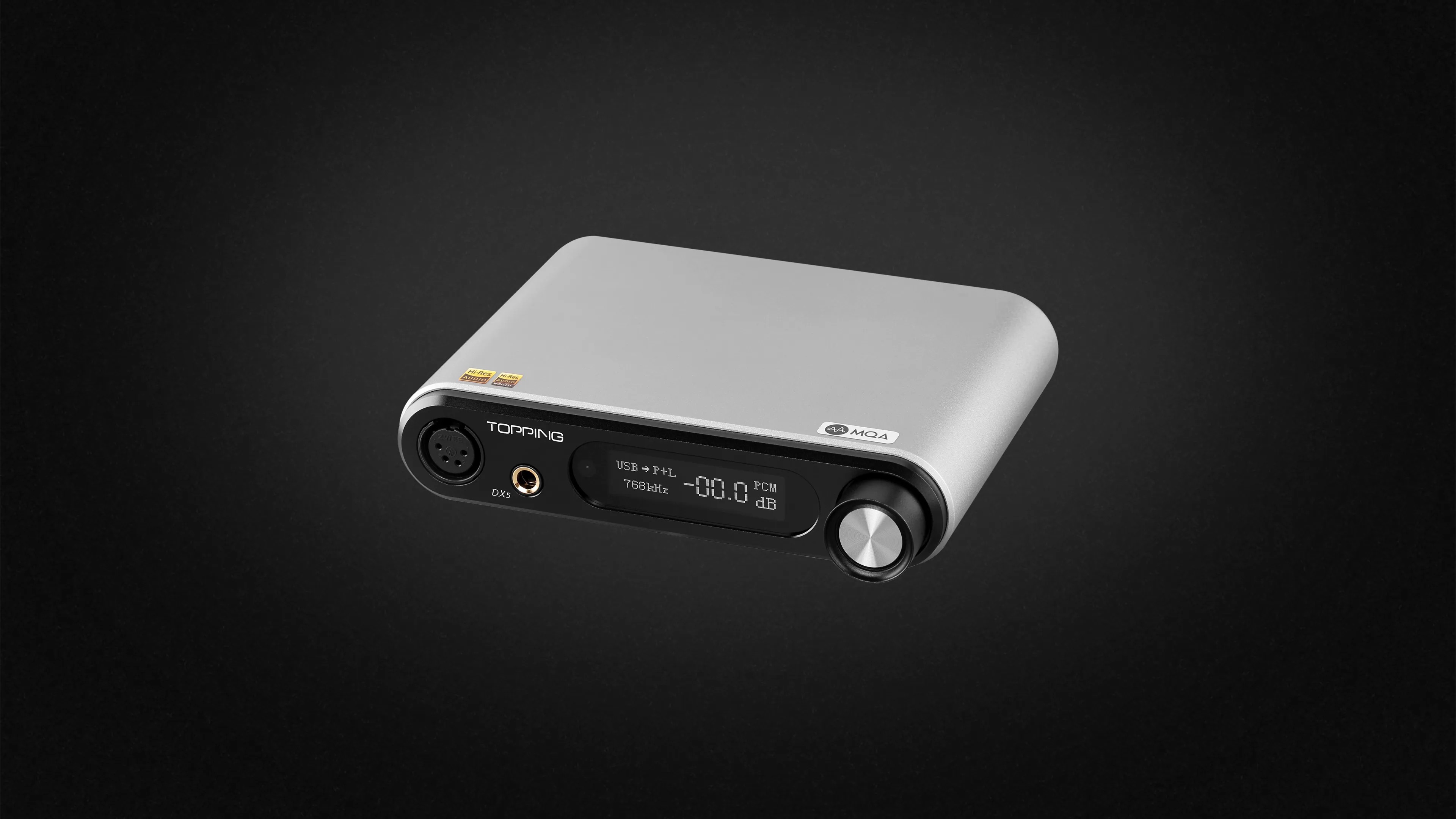
The DX5 II is housed in a compact aluminum chassis that feels solid and well-assembled, though it does not quite reach the tank-like heft of something like a Schiit Bifrost. The footprint is reasonable at 6.5 by 5.5 inches, and at just 1.6 inches tall, it sits comfortably under a monitor or alongside a keyboard without dominating desk real estate. The front panel is clean and purposeful: a responsive volume encoder doubles as a menu navigation dial, flanked by the 4.4mm balanced and 6.35mm single-ended headphone jacks. An IPS display occupies the center, showing volume level, input source, sample rate, and EQ status. The display is crisp and legible at arm’s length, though it can wash out in bright lighting conditions and becomes difficult to read from across a room.
The rear panel is where the DX5 II reveals its ambitions. USB-C handles the primary computer connection — a welcome modernization over the USB-B ports still found on many competitors. Optical TOSLINK and coaxial S/PDIF inputs accommodate legacy sources like televisions and game consoles. Balanced XLR and single-ended RCA line-level outputs allow the DX5 II to serve as a pure DAC feeding a separate power amplifier or active speakers. The Bluetooth antenna is internal, and pairing is straightforward through the front-panel menu system.
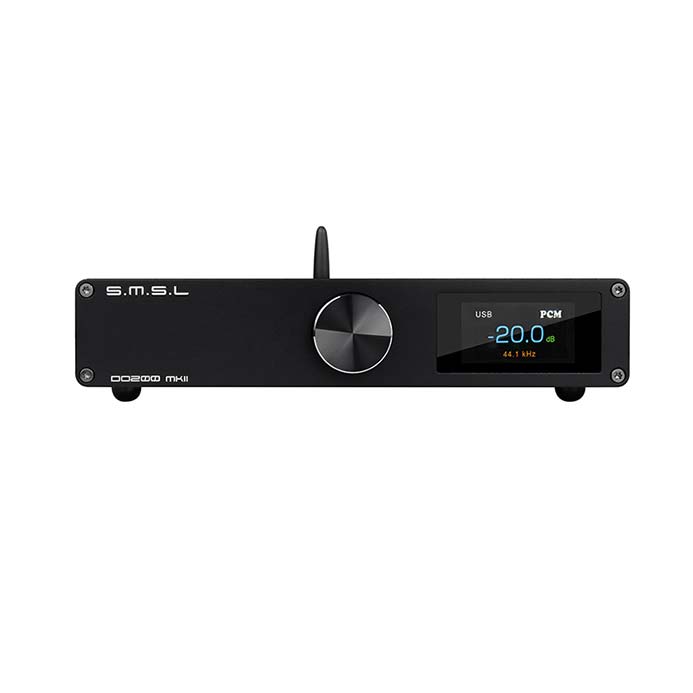
That menu system, however, is where the DX5 II demands patience. Navigating through input selection, EQ configuration, filter settings, and display options using a single rotary encoder is functional but not intuitive. First-time users will want to keep the manual handy as they learn the button press sequences for accessing different menus. The absence of a remote control is a notable omission — at $299, competitors like the SMSL DO200 MKII include one. For a desk-bound listener sitting directly in front of the unit, this is a minor inconvenience. For anyone using the DX5 II as part of a living room system connected via optical, the lack of remote control is a genuine limitation.
Value Proposition
The Topping DX5 II occupies a position in the market that, frankly, no other product at this price point can match. At $299, it delivers a flagship-class DAC chip, a headphone amplifier powerful enough to drive virtually anything, balanced outputs for both headphones and line-level, Bluetooth 5.1 with LDAC, and a 10-band parametric EQ — all in a single compact chassis. To assemble this same feature set from separates, you would need a DAC, a headphone amp, a Bluetooth receiver, and a hardware EQ unit, easily exceeding $600 in total.
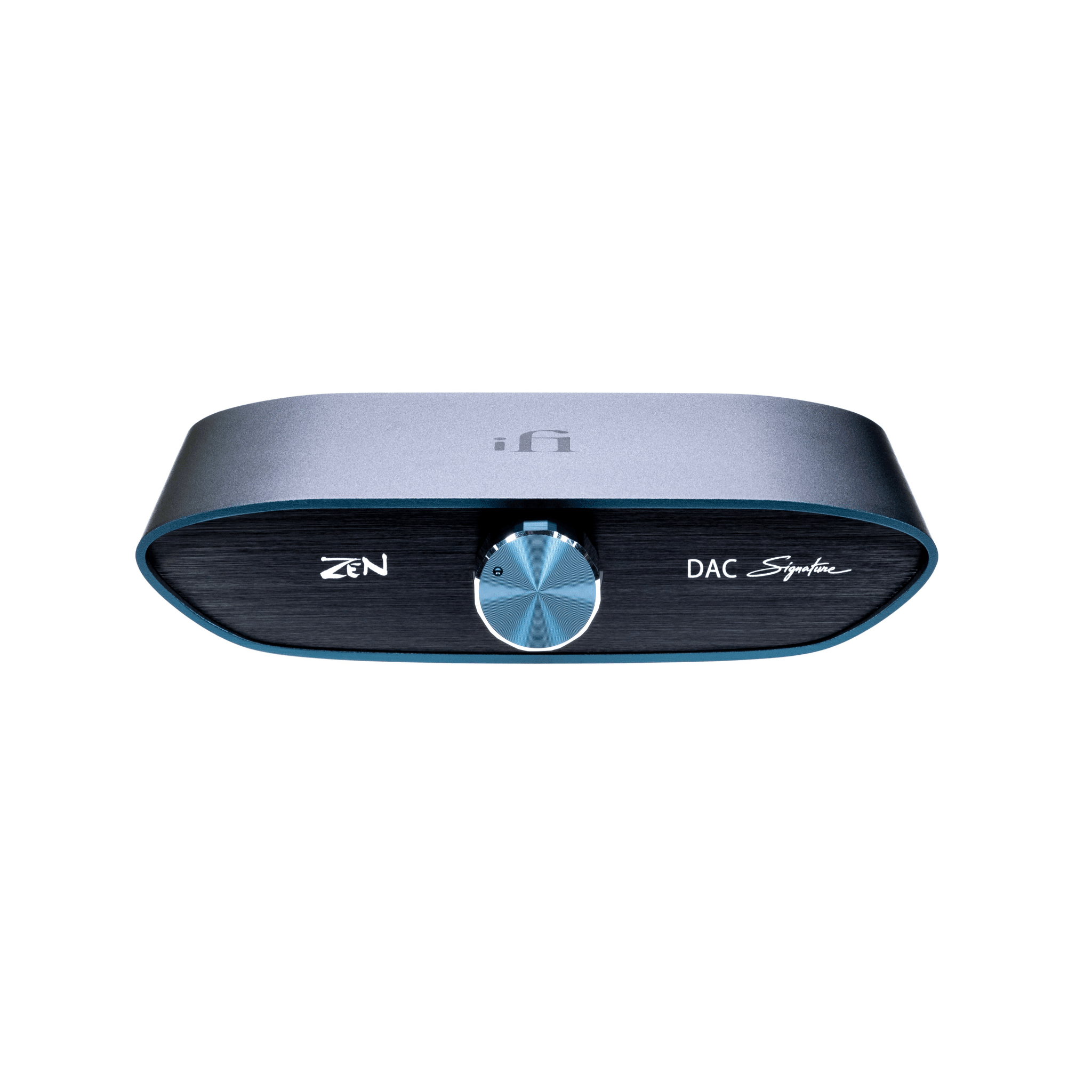
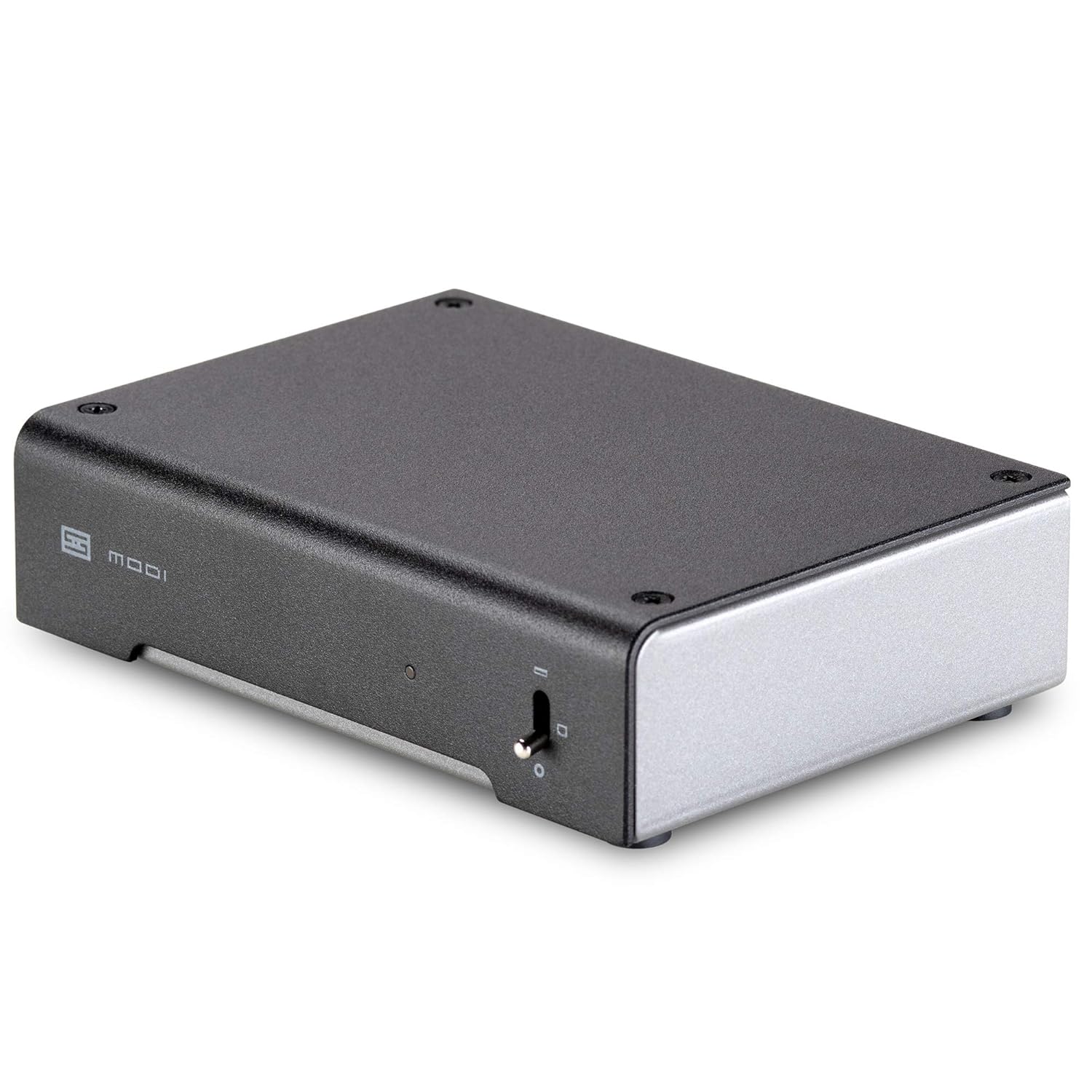
The most direct competitor is the iFi Zen DAC V2, which shares the all-in-one philosophy but at a lower price and with significantly less power and no parametric EQ. Stepping up, the JDS Labs Element III and Schiit Magnius/Modius stack offer comparable amplification but lack Bluetooth and EQ entirely. The DX5 II essentially consolidates an entire desktop audio chain into a single unit without making meaningful compromises in any area.
For the headphone enthusiast who wants one box on their desk that handles every source, drives every headphone, and allows granular tonal adjustments without fussing with system-level software EQ, the Topping DX5 II is the most compelling product available under $300. Its parametric EQ alone justifies the purchase for anyone who has ever wished they could tame a headphone’s treble peak or extend its sub-bass — and the fact that this EQ works across all inputs, including Bluetooth, makes it uniquely powerful. The DX5 II is not just a good value; it is the new benchmark for what a sub-$300 DAC/amp combo should offer.