Sound Quality
The SMSL DO200 MKII makes a statement with its silicon: dual ESS ES9038PRO chips operating in a monaural configuration, one per channel. The ES9038PRO is the flagship chip in ESS’s Sabre line — the same converter found in professional studio equipment and reference-grade consumer DACs costing several thousand dollars. Running two of them in mono mode means each chip handles a single channel with its full complement of internal DAC elements, maximizing dynamic range and minimizing crosstalk. The measured specifications reflect this approach — SINAD figures north of 120dB and THD+N numbers that push into the realm of laboratory test equipment. These are not marketing numbers; they are audible in the form of an utterly black noise floor and a clarity that reveals details previously buried in the mix.
In listening, the DO200 MKII presents music with a reference-grade neutrality that borders on the surgical. There is no discernible coloration in any frequency band — bass is taut and precisely controlled without warmth or bloom, the midrange is transparent and honest, and the treble extends with crystalline clarity that never tips into harshness. Microdynamics are a particular strength; the subtle variations in a pianist’s touch or the breath control of a vocalist are rendered with a granularity that lesser DACs simply smooth over. Macrodynamics are equally impressive — orchestral crescendos expand with real authority, and the DAC never compresses or congests during complex passages. The presentation is wide and deep, with excellent instrument separation that allows dense arrangements to breathe.
DSD512 and PCM up to 768kHz are fully supported, which positions the DO200 MKII to handle any high-resolution format currently available and most that are likely to emerge in the near future. MQA rendering is also onboard for Tidal subscribers, fully unfolding MQA-encoded streams to their intended resolution. For the listener who has invested in a high-resolution music library or streams from services that offer lossless and hi-res content, the DO200 MKII ensures that no information is left on the table.
The caveat — and it is an important one — is that the DO200 MKII is a pure DAC with no headphone amplifier. It is designed to feed a separate amplifier, whether that is a dedicated headphone amp, an integrated amplifier, or active studio monitors. The balanced XLR outputs are the preferred connection, delivering the full performance of the dual-mono architecture, though the single-ended RCA outputs are no slouch. This means the DO200 MKII is not a standalone solution for headphone listeners; it is one component in a chain, and its performance ceiling will be dictated in part by the quality of the amplifier downstream.
Build & Features
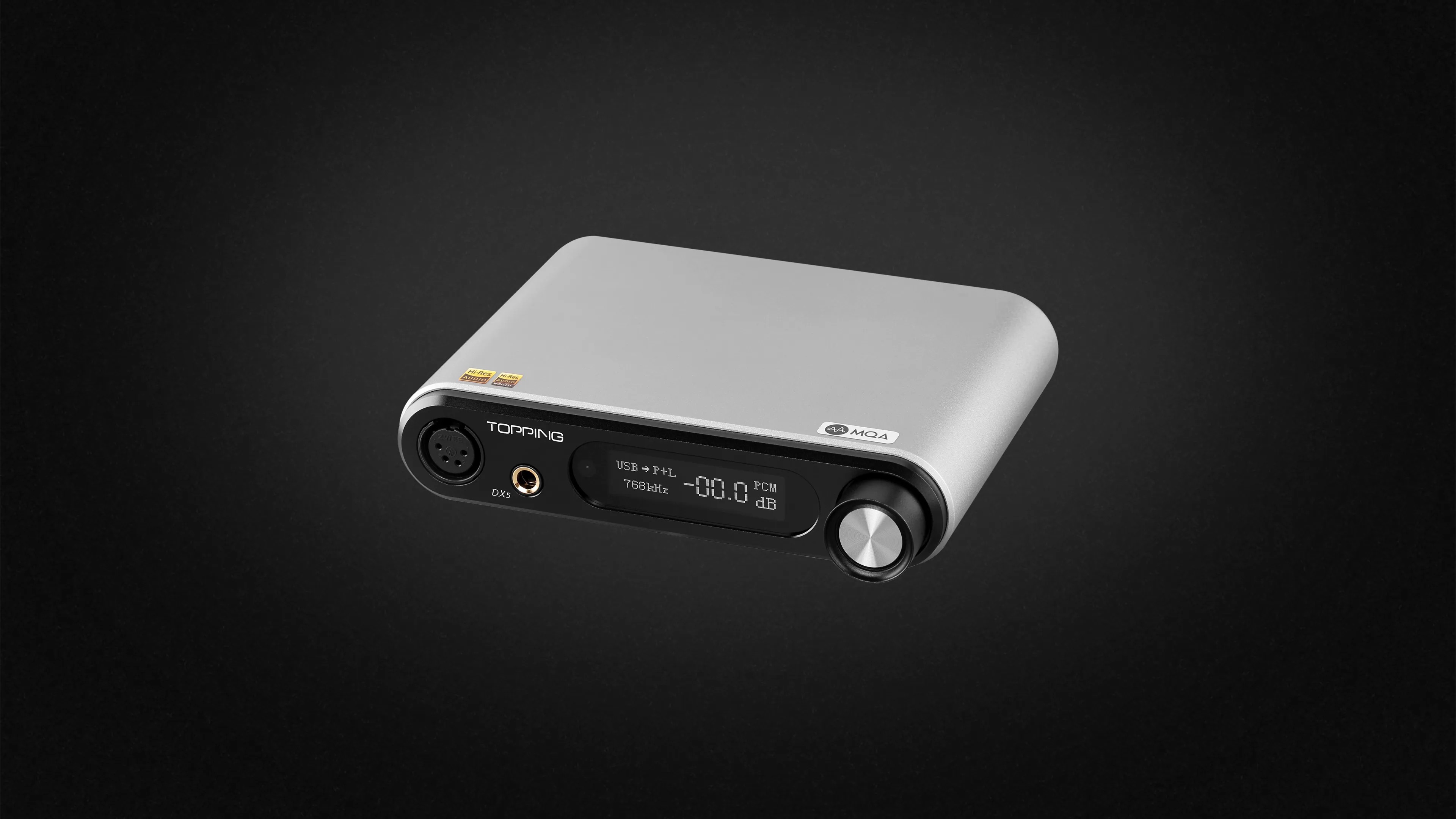
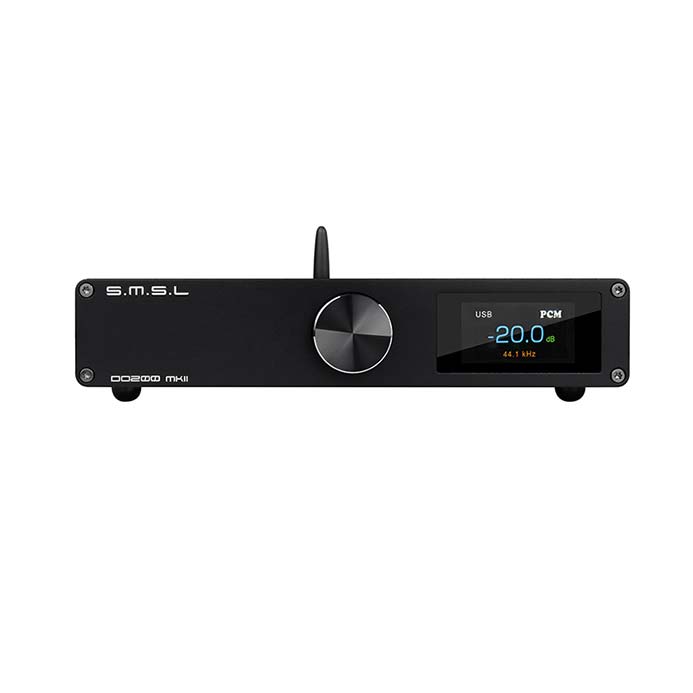
The DO200 MKII is a substantial piece of equipment by desktop DAC standards. At 8.6 by 6.1 inches and 1.6 inches tall, it claims considerably more desk real estate than compact units like the Topping D10s or even the DX5 II. The aluminum chassis is well-machined with clean lines and a professional aesthetic that would not look out of place in a recording studio or alongside traditional hi-fi separates. The front panel features a display that shows the active input, sample rate, volume level, and filter mode. Build quality is reassuring — the unit has enough heft to suggest quality internal components and proper shielding, and the tolerances between panels are tight and consistent.
The rear panel is where the DO200 MKII truly distinguishes itself from the competition. The input selection is the widest available at this price point: USB for computer connectivity, optical TOSLINK and coaxial S/PDIF for legacy digital sources, AES/EBU for professional environments, I2S via HDMI connector for direct connection to compatible streamers, and Bluetooth 5.0 for wireless convenience. The I2S and AES inputs are particularly noteworthy — these are connections typically found on DACs costing two to three times as much, and they open the door to integration with high-end network streamers and professional audio chains. On the output side, balanced XLR and single-ended RCA cover the standard connections, and both can be active simultaneously for bi-amping or feeding multiple zones.
The included infrared remote control is a welcome addition that many competitors in this price range omit. It handles input selection, volume adjustment, and filter switching from the listening position — a genuine convenience for anyone integrating the DO200 MKII into a living room or nearfield setup where reaching the unit is not always practical. The remote itself is a basic plastic affair, but it is responsive and covers all the essential functions. Multiple digital filter options are accessible through both the front panel and remote, allowing users to tailor the reconstruction filter to their preference — from sharp rolloff for maximum technical accuracy to slow rolloff for a more relaxed, analog-like presentation.
Value Proposition
At $469, the SMSL DO200 MKII sits in a competitive middle ground between budget DACs and true reference equipment. It is not cheap by any measure, but the dual ES9038PRO architecture and comprehensive feature set provide a compelling argument for the investment. The most direct comparison point is the Topping D90SE, which offers similar flagship-level decoding in a comparable form factor. The DO200 MKII matches or exceeds it on input versatility while undercutting it on price.
The absence of a headphone output means that the total cost of a complete listening system is higher than it appears. Budget another $200 to $400 for a quality headphone amplifier — the Topping A90 or Schiit Asgard make excellent partners — and the total investment approaches $700 to $900. For that money, an all-in-one solution like the RME ADI-2 DAC FS enters the conversation with its own parametric EQ and headphone output. The DO200 MKII counters with superior raw decoding specifications and the flexibility of its input array, but the RME remains a formidable integrated alternative.
Where the DO200 MKII truly excels is as the digital hub of a growing audio system. Its I2S and AES inputs future-proof the investment for listeners who may add a network streamer or upgrade their digital source. Its balanced outputs deliver reference-level signal to any downstream amplifier. And its measured performance rivals DACs at two to three times the price. For the listener who has already committed to a separate amplifier and wants the best possible digital-to-analog conversion without crossing into four-figure territory, the SMSL DO200 MKII delivers flagship performance wrapped in a mid-fi price tag. It is a specialist tool, not a Swiss Army knife, and it excels precisely because it focuses on doing one thing extraordinarily well.