Sound Quality
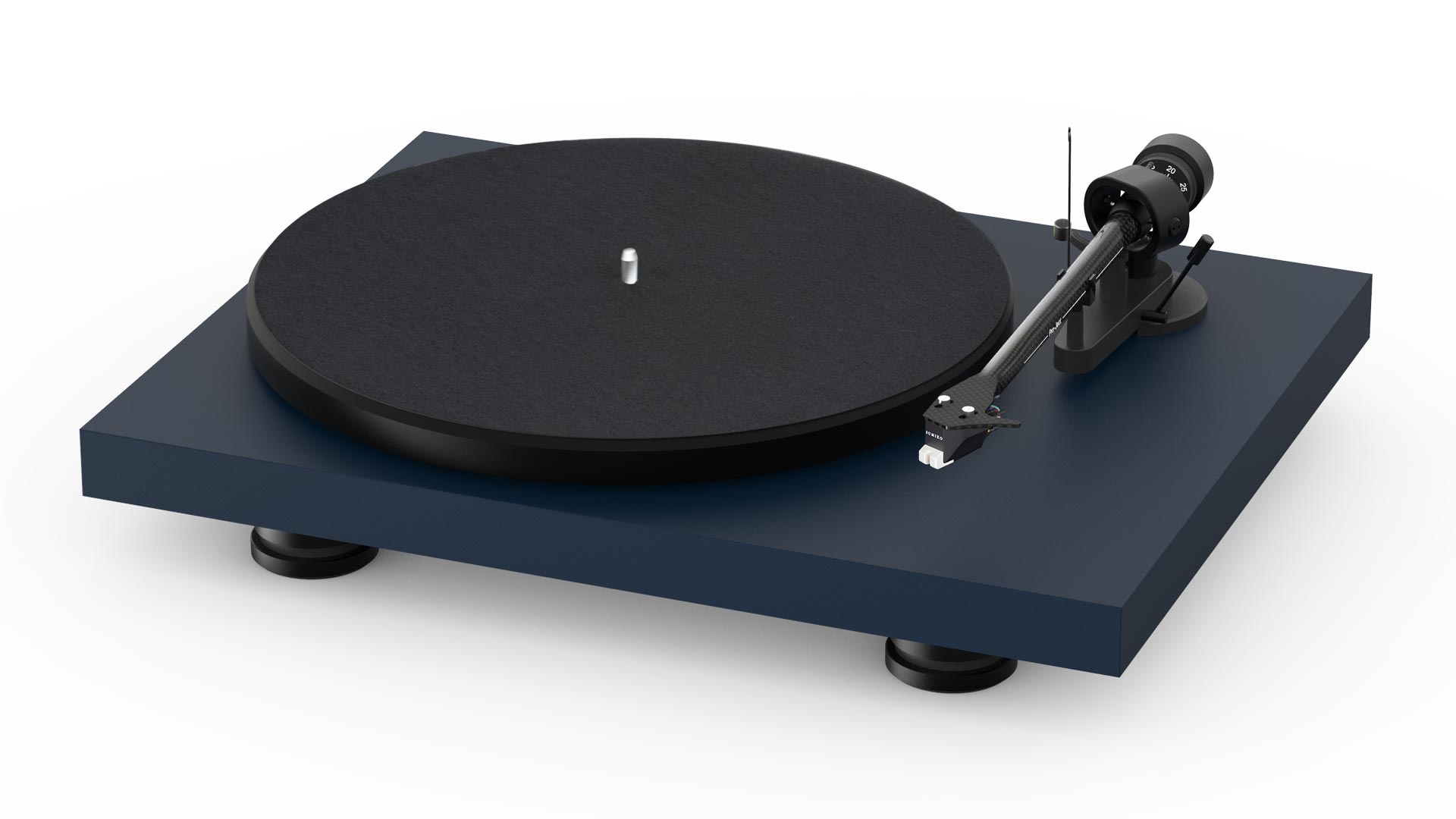
The Pro-Ject Debut Carbon EVO makes its case from the very first note, and the argument is built almost entirely on the back of its one-piece carbon fiber tonearm. Carbon fiber is stiffer and lighter than aluminum while possessing fundamentally different resonance characteristics — where an aluminum tonearm will ring at audible frequencies and color the sound with a subtle hardness in the upper midrange, the carbon fiber arm on the EVO dissipates energy without contributing its own signature. The practical result is a presentation that is open, detailed, and remarkably free of the mechanical artifacts that plague turntables at this price. You hear the record, not the turntable, and that distinction matters more than any specification sheet can convey.
The Sumiko Rainier moving magnet cartridge is a sensible if unspectacular partner for that tonearm. It is a competent tracker with a bonded elliptical stylus that retrieves solid detail across the frequency range. The midrange is smooth and musical, vocals carry warmth and presence, and the treble extends without harshness. Bass is well-defined, with enough weight to give kick drums and bass guitars their proper foundation. Where the Rainier shows its limitations is in the finest details — the decay of a cymbal shimmer, the air around a solo instrument in a large recording space, the textural nuance of a bowed string. These micro-details are present but not fully resolved, and this is exactly where a cartridge upgrade to something like the Sumiko Moonstone or an Ortofon 2M Blue transforms the EVO from very good to genuinely outstanding. The tonearm is capable of revealing far more than the stock cartridge can deliver, which is both a minor criticism and a tremendous compliment to Pro-Ject’s engineering priorities.
The TPE-damped steel platter is the other half of the sonic equation. Thermoplastic elastomer bonded to the underside of the steel platter acts as a constrained-layer damping system, absorbing vibrations that would otherwise reflect back through the record and into the stylus. The effect is a cleaner, blacker background with less low-frequency muddiness than you hear from undamped MDF or aluminum platters. Combined with the electronic speed control — which uses a precision oscillator rather than relying on the mechanical accuracy of a pulley — the EVO delivers pitch stability that is audibly rock-solid. Sustained piano notes hold true without wavering, and orchestral passages maintain their harmonic integrity from the first bar to the last. This is a turntable that rewards careful listening, and it scales beautifully with better cartridges and phono stages as your system evolves.
Build & Design
Pro-Ject has been refining the Debut platform for over two decades, and the Carbon EVO represents the most thorough evolution of that lineage to date. The most immediately striking aspect is the sheer range of finish options — ten colors including Satin Black, Satin White, Satin Walnut, High Gloss Black, and a series of bold hues like Satin Green, Satin Blue, Satin Red, Satin Yellow, Satin Fir Green, and Satin Golden Yellow. This is not a trivial consideration. A turntable lives in your room as a piece of furniture, and Pro-Ject’s willingness to offer genuine aesthetic variety sets the EVO apart from competitors that give you a choice between black and slightly different black.
The 8.6-inch one-piece carbon fiber tonearm is the centerpiece of the design, and it is a genuinely premium component at this price. One-piece construction means there are no joints or junctions along the arm tube where resonances can develop, and the carbon fiber layup is optimized for the specific stiffness-to-weight ratio needed in a tonearm application. The bearing housing is precise, with minimal play, and the counterweight and anti-skate adjustments are smooth and well-calibrated. Setting tracking force is straightforward with a stylus gauge, and the arm tracks confidently across even heavily modulated passages.
The inclusion of 78 RPM via electronic speed control is a thoughtful addition that shellac collectors will appreciate. Rather than requiring a pulley change — the clumsy solution employed by most belt-drive turntables that offer 78 — the EVO lets you switch between 33, 45, and 78 with a simple button press. The aluminum and TPE isolation feet provide effective decoupling from the support surface, though the turntable still benefits from a solid, level shelf. The dust cover is the one area where Pro-Ject cut corners; the hinges on some units feel loose and plasticky, and the cover itself can transmit vibrations if left closed during playback. Most serious listeners remove it entirely while playing records, which is standard practice but worth noting for those who prefer to leave it down.
Value Proposition
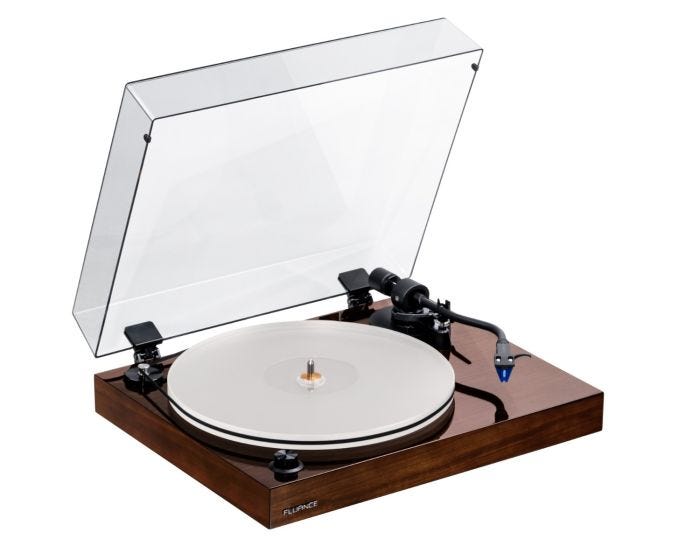
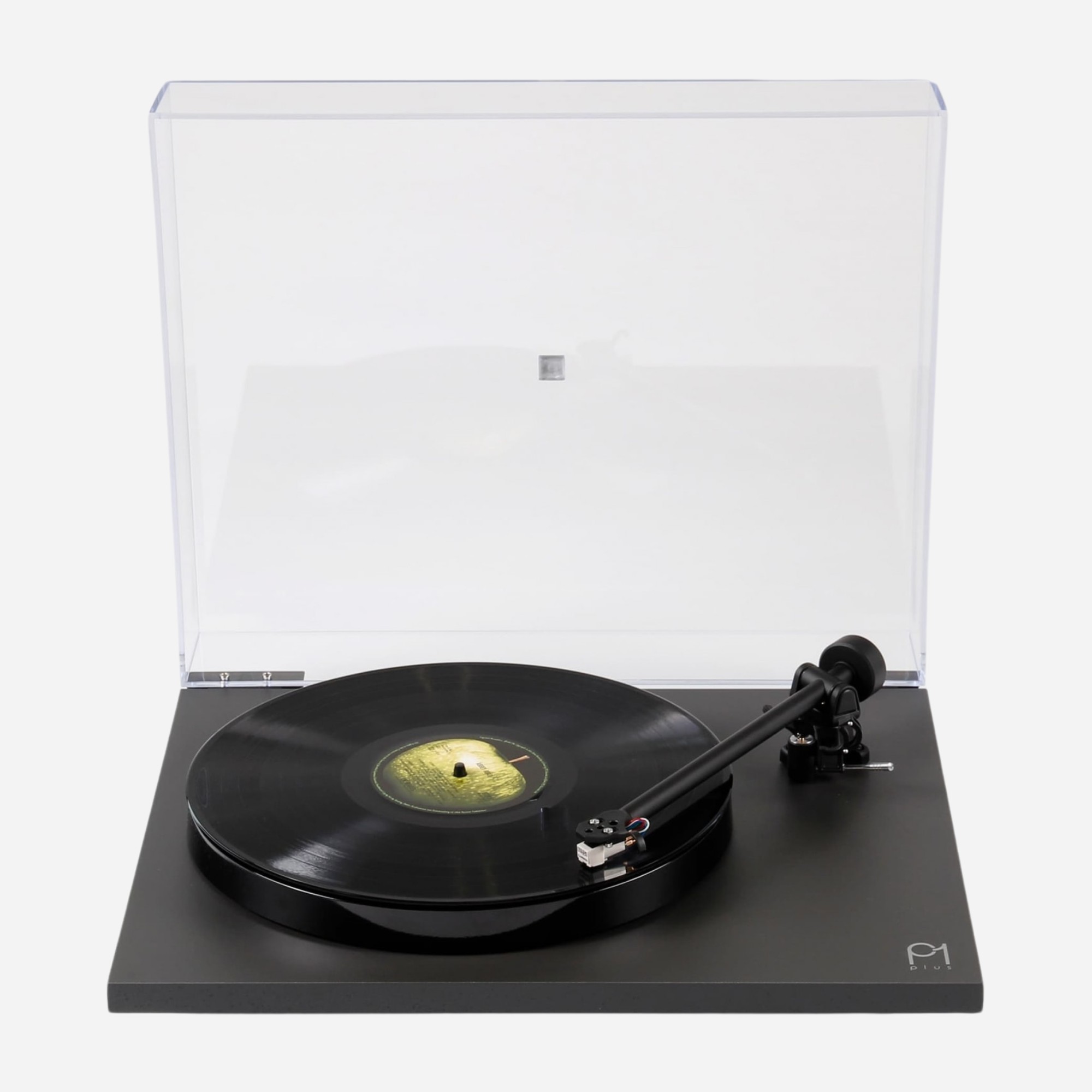
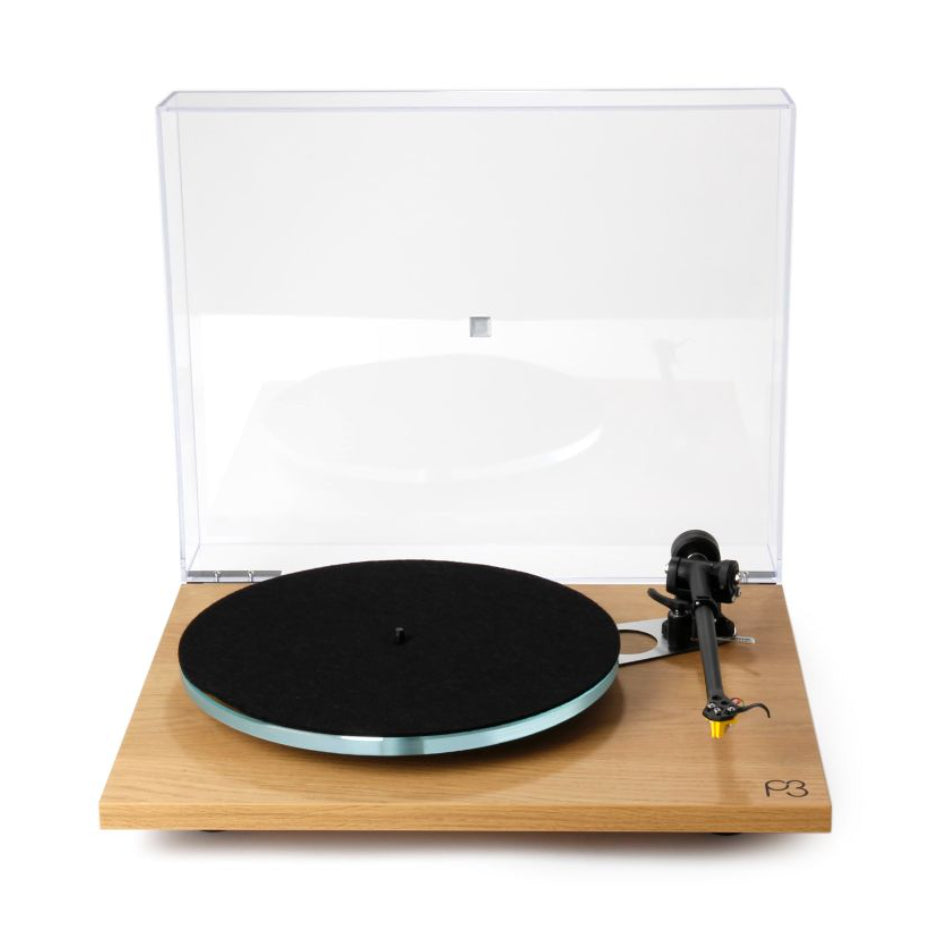
At $499, the Pro-Ject Debut Carbon EVO sits at the most competitive price point in the turntable market, directly alongside the Fluance RT85 and U-Turn Orbit Special. Each of these turntables makes a different argument for your money, but the EVO’s case is arguably the most compelling from a pure engineering standpoint. The one-piece carbon fiber tonearm is a component you simply do not find on other turntables at this price — Fluance uses an aluminum S-type arm, Rega uses aluminum on the Planar 1, and even the Audio-Technica AT-LP120X relies on a resonant aluminum tube. Carbon fiber is objectively superior for tonearm construction, and Pro-Ject’s decision to make it the foundation of a $499 turntable is the single biggest reason the EVO dominates its price class.
The absence of a built-in phono preamp means budgeting an additional $50 to $200 for an external phono stage, which pushes the total system cost to $549 to $699 depending on your ambitions. This is a fair criticism, but it is also an advantage in disguise — an external preamp can be upgraded independently, and a good $100 phono stage like the Schiit Mani 2 or iFi Zen Phono will outperform any built-in preamp on the market. The upgrade path on the EVO is genuinely exciting. Swap the Sumiko Rainier for an Ortofon 2M Blue or a Nagaoka MP-110, add a quality phono stage, and you have a turntable that competes with setups costing $1,000 or more. For the listener who wants to buy one turntable and grow into it over years of cartridge and phono stage upgrades, the Debut Carbon EVO is the smartest $499 you can spend on vinyl playback.