Sound Quality
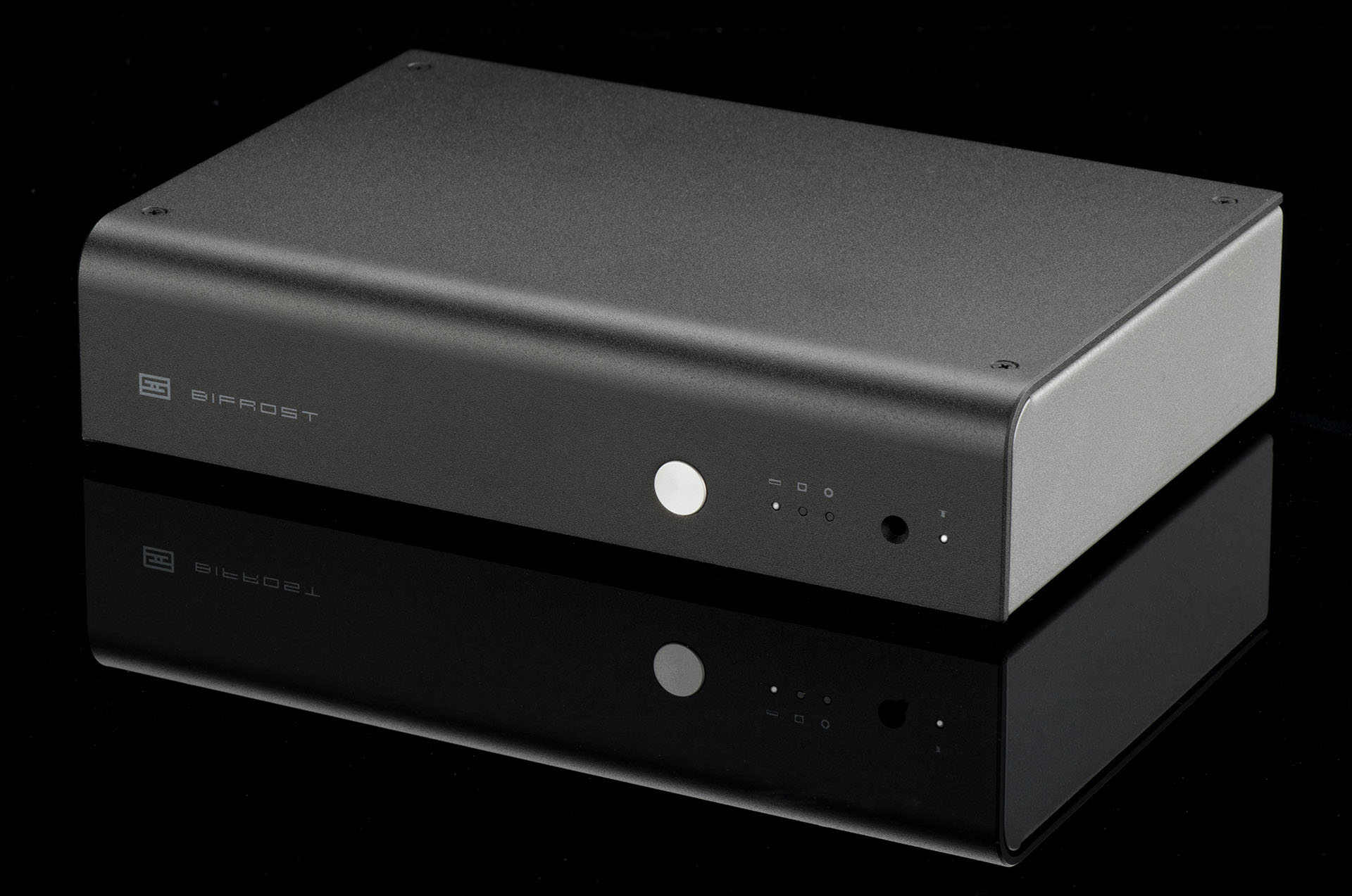
The Schiit Bifrost 2 employs a multibit R-2R ladder DAC architecture — a fundamentally different approach to digital-to-analog conversion than the delta-sigma chips found in the overwhelming majority of modern DACs. Where a delta-sigma converter like the ESS Sabre or AKM Velvet uses oversampling and noise shaping to approximate an analog waveform, an R-2R ladder DAC uses a network of precision resistors to directly convert each digital word into an analog voltage. The theoretical advantages are debated endlessly in audiophile forums, but the practical result in the Bifrost 2 is a sound that is immediately and unmistakably different from its delta-sigma competitors.
The first thing you notice is the way the Bifrost 2 renders the texture of instruments. A nylon-string guitar has a tactile quality — you sense the fingertip contacting the string, the resonance of the body, the decay trailing off into silence in a way that feels continuous rather than quantized. Vocals possess a three-dimensionality that places the singer in front of you rather than between your ears. Piano strikes have weight and body, with the complex harmonic overtones of the hammered strings blooming naturally rather than arriving as a precise but static event. These are not subtle differences once you have calibrated your ears to them. Switching from the Bifrost 2 to a clean delta-sigma DAC — even an excellent one — reveals the latter as slightly mechanical by comparison, as though the music is being reconstructed rather than simply flowing.
The tonal balance leans slightly warm, with a lower midrange that is a few degrees richer than strict neutrality. This is not a coloration in the pejorative sense — it is a character, a deliberate voicing that aligns the Bifrost 2 with the analog equipment that many audiophiles consider their reference. Bass is extended and controlled but carries a roundness that tube amplifier enthusiasts will recognize. The treble is smooth and naturally detailed, free of the grain or glare that can afflict lesser implementations. There is air and space around instruments, but it is not the hyper-analytical separation of a measurement-optimized delta-sigma — it is the kind of spatial presentation that a good pair of speakers creates in a well-treated room.
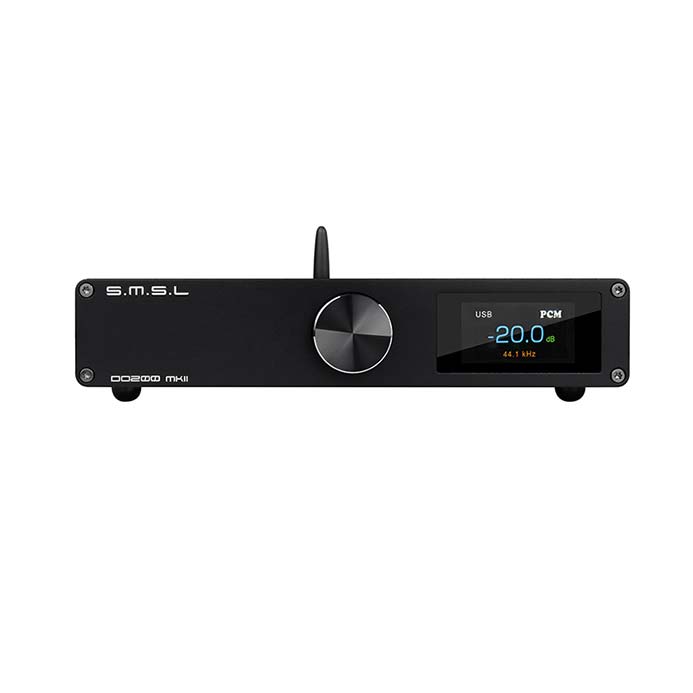
Where the Bifrost 2 gives up ground to its delta-sigma competitors is in absolute measured transparency. Its SINAD and THD+N figures, while perfectly respectable, do not approach the stratospheric numbers posted by DACs like the SMSL DO200 MKII or Topping D90. For the measurement-focused objectivist, this is a dealbreaker. For the listener who trusts their ears over an oscilloscope, the Bifrost 2 offers something that no amount of dynamic range can replicate: an emotional connection to the music that makes you forget you are listening to a digital source. It pairs exceptionally well with acoustic genres — jazz, classical, folk, and well-recorded rock — where the natural timbre and decay of real instruments are the point of the performance.
Build & Features
The Bifrost 2 is the most physically imposing DAC in our reviews, and it wears that size as a badge of honor. At nine inches wide, nearly seven inches deep, and over two inches tall, it is a genuine hi-fi component that demands its own shelf or a dedicated section of desk. The chassis is machined from thick aluminum with a distinctive curved top plate that has become Schiit’s signature design element. It weighs approximately four pounds — substantially heavier than anything in the sub-$500 category — and that weight inspires confidence. Set it on your desk and it stays put. The build quality is immediately apparent: panel gaps are tight, edges are smooth, and the overall fit and finish communicates permanence in a way that lightweight aluminum extrusions simply cannot.
Every Bifrost 2 is manufactured at Schiit’s facility in Valencia, California. This is not just a marketing point — it has practical implications. The modular architecture means the USB input board and the DAC board itself can be removed and replaced by the user. When Schiit releases an updated DAC module with improved performance or new capabilities, owners can purchase the upgrade card and install it themselves with nothing more than a screwdriver. This future-proofing is unique in the market and transforms the Bifrost 2 from a static product into an evolving platform. The original Bifrost owners who upgraded from the first-generation Uber Analog board to the multibit True Multibit board can attest to the value of this approach.
The rear panel houses USB, optical TOSLINK, and coaxial S/PDIF inputs — a standard complement that covers the essential digital sources. Notably absent are Bluetooth, I2S, AES/EBU, or any form of network streaming. Schiit’s philosophy here is deliberate: the Bifrost 2 is a dedicated converter, not a digital Swiss Army knife. If you want Bluetooth, add a separate receiver. If you want streaming, add a streamer. The outputs include both single-ended RCA and true balanced XLR, with the balanced stage using relay switching for signal path purity. The internal linear power supply — as opposed to the external switching wall warts that power most budget DACs — contributes to the unit’s weight and size but eliminates a common source of electrical noise.
Value Proposition
At $799, the Schiit Bifrost 2 is the premium selection in our DAC roundup, and it demands a different kind of justification than a $299 all-in-one. You are not paying for the most inputs, the most features, or the best measurements. You are paying for a specific sonic character that only R-2R multibit conversion can deliver, built into a chassis that is designed to last a decade or more and evolve with upgradeable internals.
The most direct competitors are the Denafrips Ares II and the Musician Pegasus — both R-2R DACs in a similar price range that chase a similar sonic ideal. The Bifrost 2 holds its own against both, with the added advantages of domestic manufacturing, user-serviceable modularity, and Schiit’s established warranty and customer service infrastructure. On the delta-sigma side, the RME ADI-2 DAC FS offers parametric EQ, a headphone amplifier, and reference-grade measurements for roughly the same money, but trades away the organic R-2R character entirely.
The Bifrost 2 is not for everyone. If you value features, connectivity, and Swiss Army knife versatility, the Topping DX5 II at less than half the price is the smarter purchase. If you want the absolute best measured performance per dollar, the SMSL DO200 MKII delivers flagship specifications for $330 less. But if you have ever listened to a well-set-up turntable and wished your digital source could capture even a fraction of that analog magic — that effortless, organic flow that makes you stop analyzing and start feeling — the Schiit Bifrost 2 is the closest that digital gets. It is an investment in a philosophy of audio reproduction that prioritizes the musical experience above all else, backed by a company that builds its products to be repaired, upgraded, and enjoyed for years to come.